
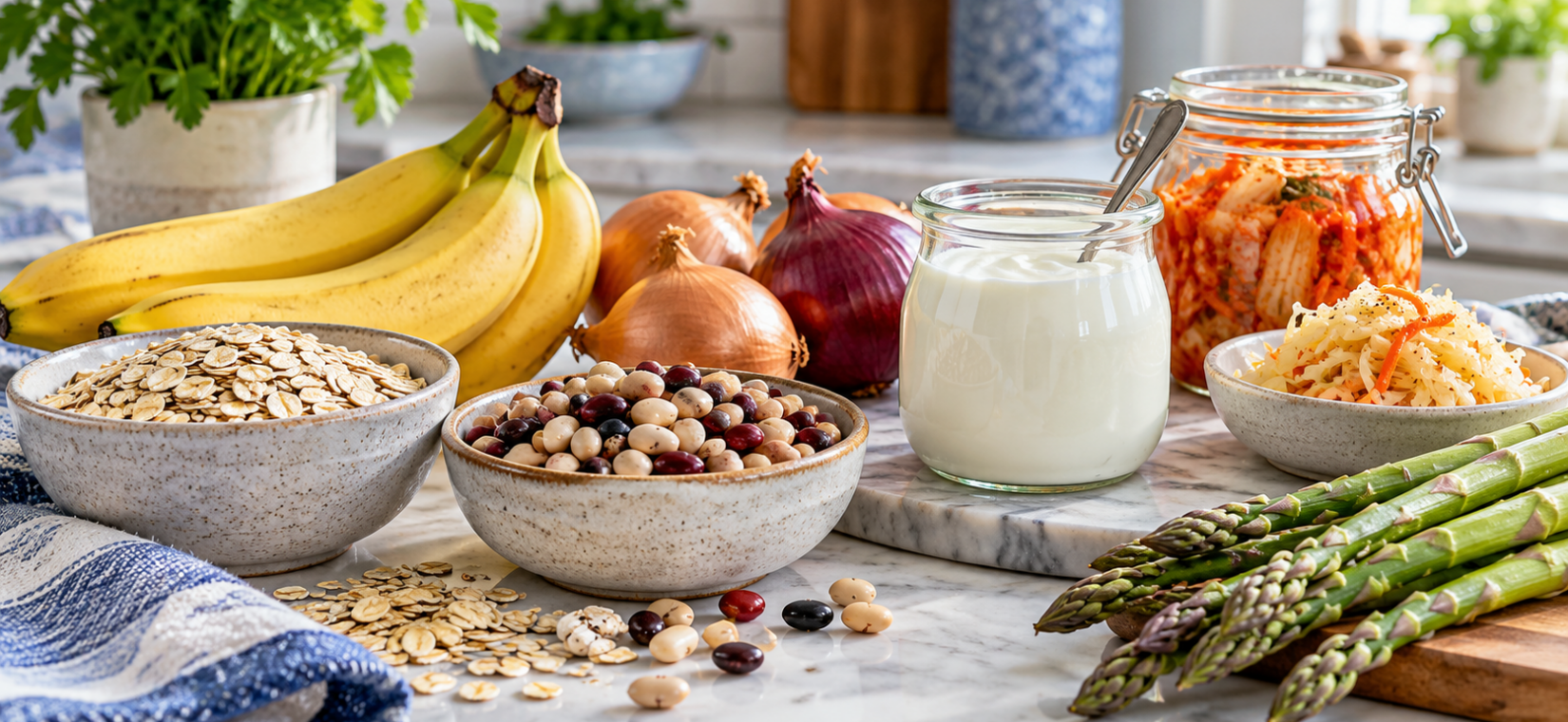
Prebiotics vs. probiotics is a common comparison, but the two terms describe different things. Understanding the difference can help you make a more informed choice about food or supplements for gut health.
Probiotics are live microorganisms that, when provided in adequate amounts, can offer a health benefit. Prebiotics are substances used by microorganisms in ways that can benefit health. They are not interchangeable, and neither category guarantees that a particular product will solve a digestive concern.
What probiotics are intended to provide
A probiotic product contains identified microorganisms. Its usefulness depends on details such as the strain, amount, intended use, and the evidence for that use.
Research on one strain does not establish that every probiotic has the same effect. Likewise, evidence for one condition should not be transferred automatically to another.
Some fermented foods contain live microorganisms, but fermentation alone does not prove a food has the specific health benefits demonstrated for a studied probiotic. Food labels and product information can help clarify what is actually included.
How prebiotics differ
Prebiotics provide substances that certain microorganisms can use. Some are types of dietary fiber, but it is inaccurate to assume that every fiber is a proven prebiotic.
For everyday eating, a varied pattern containing vegetables, fruits, legumes, and whole grains is a practical starting point for dietary fiber. You can make ordinary meals more varied without needing to identify every component by a marketing term.
If you are considering a concentrated prebiotic supplement, check the specific ingredient and the intended serving. Introduce changes thoughtfully, particularly if you already experience digestive discomfort.
Choose a supplement for a specific reason
Before buying either type, define your question. Are you trying to improve the variety of your diet, or are you seeking advice about an ongoing digestive symptom?
Those situations call for different decisions. Adding beans or whole grains to meals is a food-planning choice. Persistent pain, ongoing bowel changes, or other concerning symptoms deserve assessment.
The NIH National Center for Complementary and Integrative Health explains that uncertainty remains about which probiotics are helpful for many conditions. Product-specific evidence matters more than a broad promise about “gut balance.”
Read strain and storage information
For a probiotic, look for identification detailed enough to match the product to its research, ideally including the strain. Review the amount provided, storage instructions, and information about viability through the product’s shelf life.
A larger microorganism count does not automatically establish that a product is more effective for your goal. The relevant strain and supporting evidence still matter.
People who are seriously ill or have weakened immune systems should discuss probiotic use with their healthcare team because risks can differ.
PEPVYN patches and a broader wellness routine
If you are also exploring PEPVYN patches, keep that choice distinct from selecting a prebiotic or probiotic. A patch should not be counted as dietary fiber or assumed to provide the effects of a studied oral gut-health product.
You can organize a routine by giving each choice a clear purpose: food for daily nourishment, a specific gut product when appropriate, and an individually evaluated patch if the format interests you.
Review the PEPVYN patch’s label and evidence on its own terms rather than applying probiotic research to it.
Common questions
Are all fermented foods proven probiotics?
No. A fermented food does not automatically meet the evidence requirements associated with a specific probiotic benefit.
Do I need both a prebiotic and a probiotic?
That depends on your goals and individual needs. Buying both is not a requirement for a balanced eating pattern.
Explore PEPVYN patches at Refresh Club to review the wearable format while keeping your food and gut-health choices clearly defined.
Sources
NIH NCCIH Probiotics Usefulness and Safety; NIDDK Health Tips for Adults